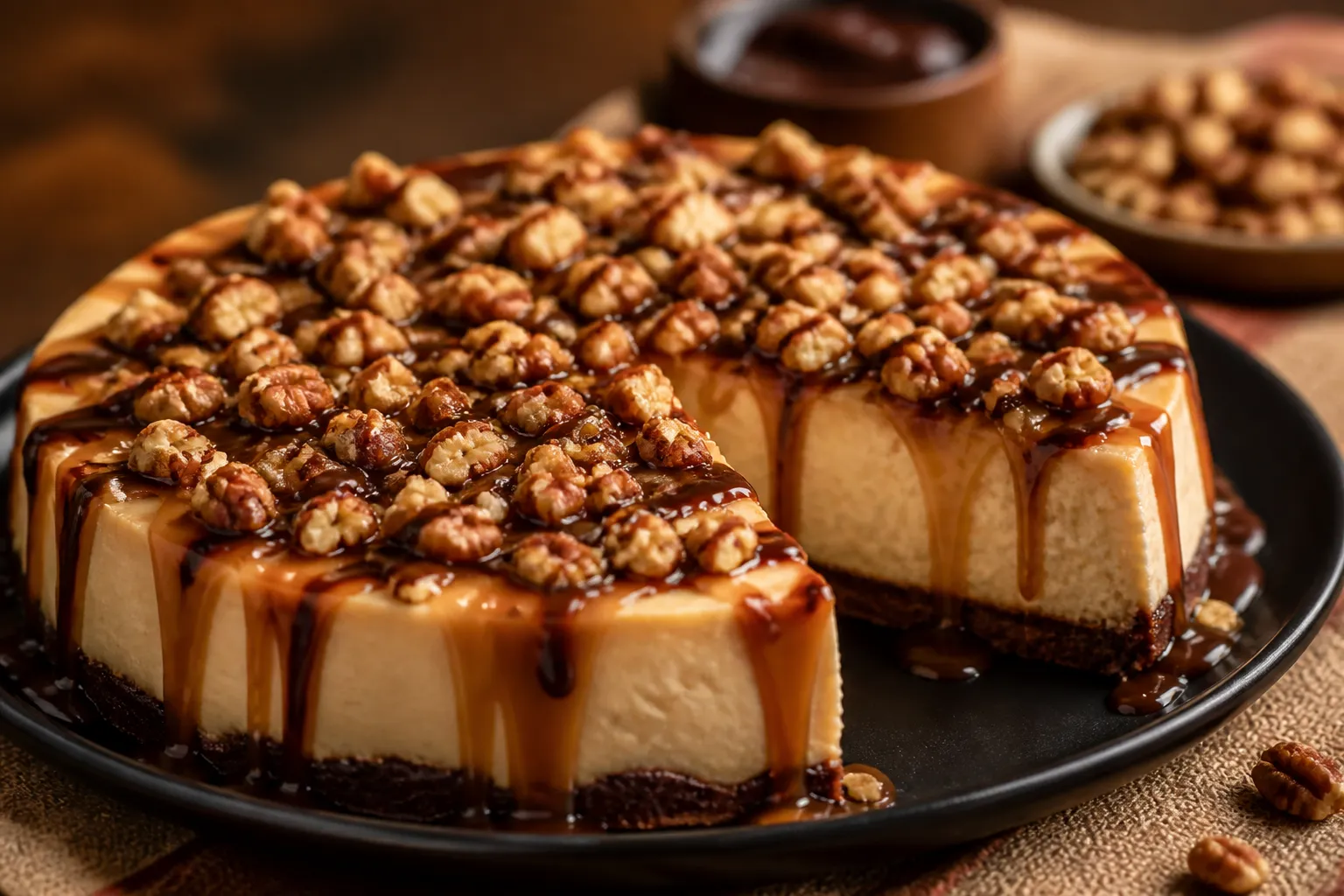
High Protein Low Carb Turtle Protein Cheesecake – A Rich, Better-For-You Dessert
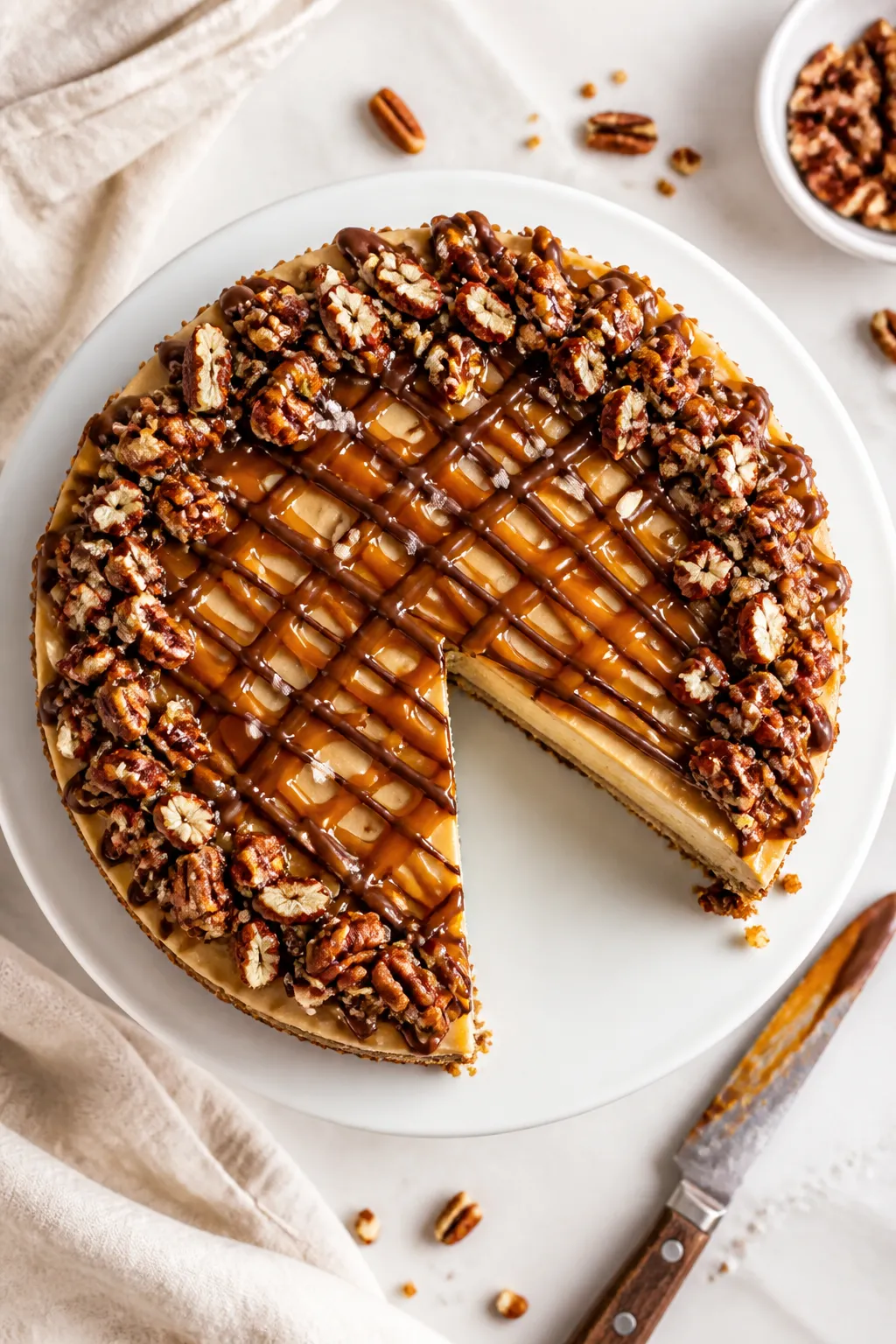
If you love the classic turtle combo—creamy cheesecake, chocolate, caramel, and crunchy pecans—but want to keep it lighter, this recipe is for you. It’s rich, silky, and satisfying without the sugar crash. You still get that sweet-salty bite and a proper cheesecake texture, just with smarter ingredients.
FREE 7-Day Easy Dinner Reset
Get 7 healthy, family-friendly dinners complete with recipes and simple meal plans delivered straight to your inbox.
This version packs a serious protein punch while staying low in carbs, so it fits well into a balanced routine. Whether you’re meal-prepping desserts or baking for a crowd, it delivers.
High Protein Low Carb Turtle Protein Cheesecake - A Rich, Better-For-You Dessert
Ingredients
Method
- Prep the pan: Heat oven to 325°F (165°C). Line the bottom of a 9-inch springform pan with parchment. Lightly grease the sides.
- Make the crust: In a bowl, combine almond flour, melted butter, sweetener, cinnamon, and salt until it resembles damp sand. Press evenly into the pan. Bake 8–10 minutes, just until set and lightly golden. Cool while you make the filling.
- Blend the dairy base: In a food processor, blend cottage cheese until completely smooth, 1–2 minutes. Add cream cheese and Greek yogurt; blend again until uniform and silky.
- Add flavor and protein: Add sweetener, vanilla, lemon juice, salt, and protein powder. Pulse until smooth. Taste and adjust sweetness if needed.
- Incorporate eggs: Add eggs one at a time, pulsing briefly after each. Do not overmix—just until combined. Overmixing adds air and can cause cracks.
- Fill and smooth: Pour the filling onto the crust. Tap the pan gently on the counter a few times to release air bubbles. Run a spatula over the top to even it out.
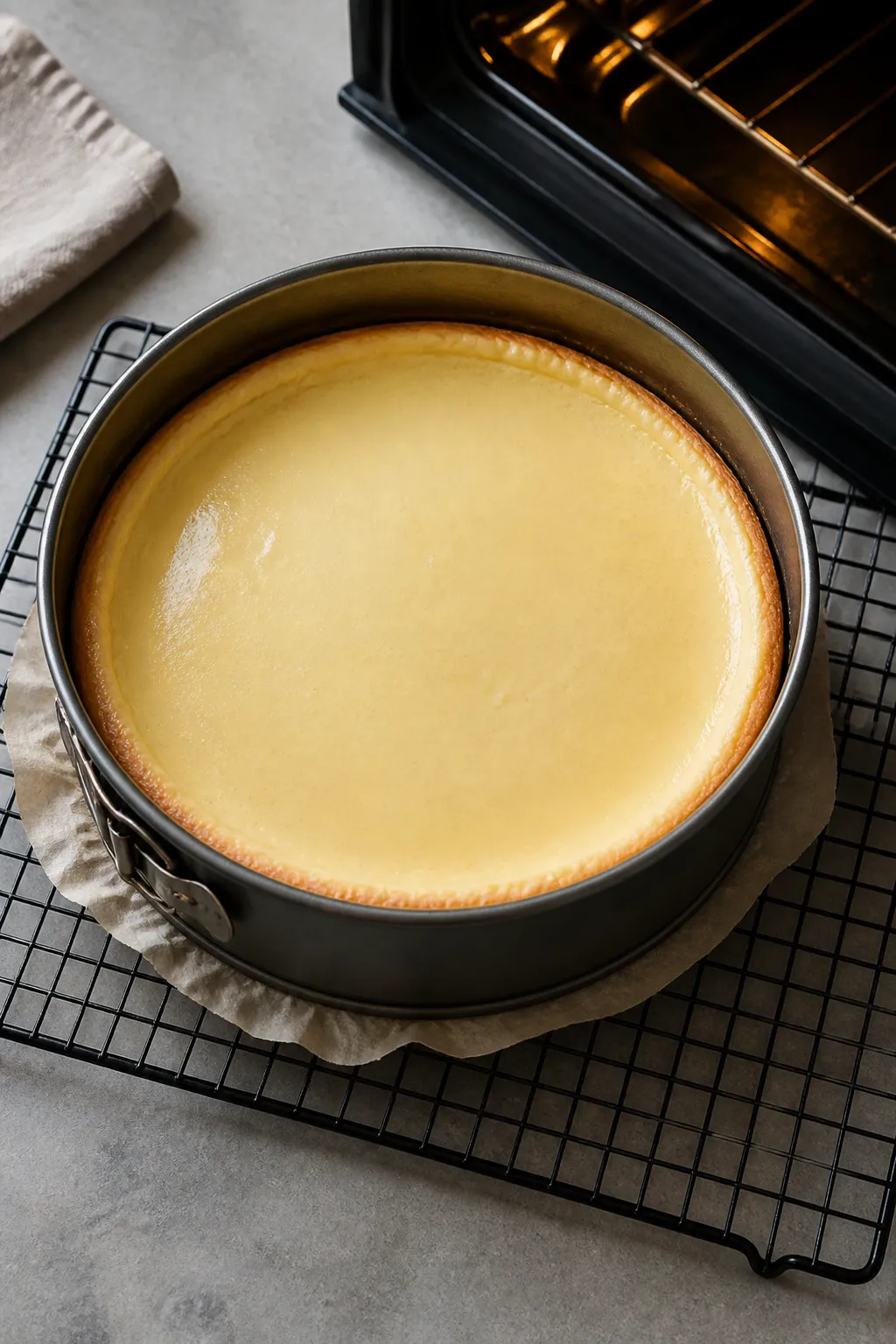
- Bake low and slow: Bake at 325°F for 35–45 minutes. The edges should be set and the center should have a gentle jiggle. If it browns too quickly, tent loosely with foil.
- Cool gradually: Turn off the oven, crack the door, and let the cheesecake sit inside for 30 minutes. Then cool on the counter for another 30 minutes.
- Chill completely: Cover and refrigerate at least 4 hours, preferably overnight, to set the texture.
- Toast the pecans: While it chills, toast pecans in a dry skillet over medium heat for 3–4 minutes until fragrant. Cool and chop.
- Add toppings: Melt chocolate chips with coconut oil in short microwave bursts, stirring until smooth. Drizzle chocolate and caramel over the chilled cheesecake. Sprinkle with toasted pecans and a pinch of flaky sea salt.
- Slice cleanly: Run a knife around the edge before releasing the springform. Warm a sharp knife under hot water, wipe dry, and slice. Clean the knife between cuts.
What Makes This Recipe So Good
- High protein, low carb: Greek yogurt, cottage cheese, and whey isolate give you a cheesecake that actually helps you hit your protein goals.
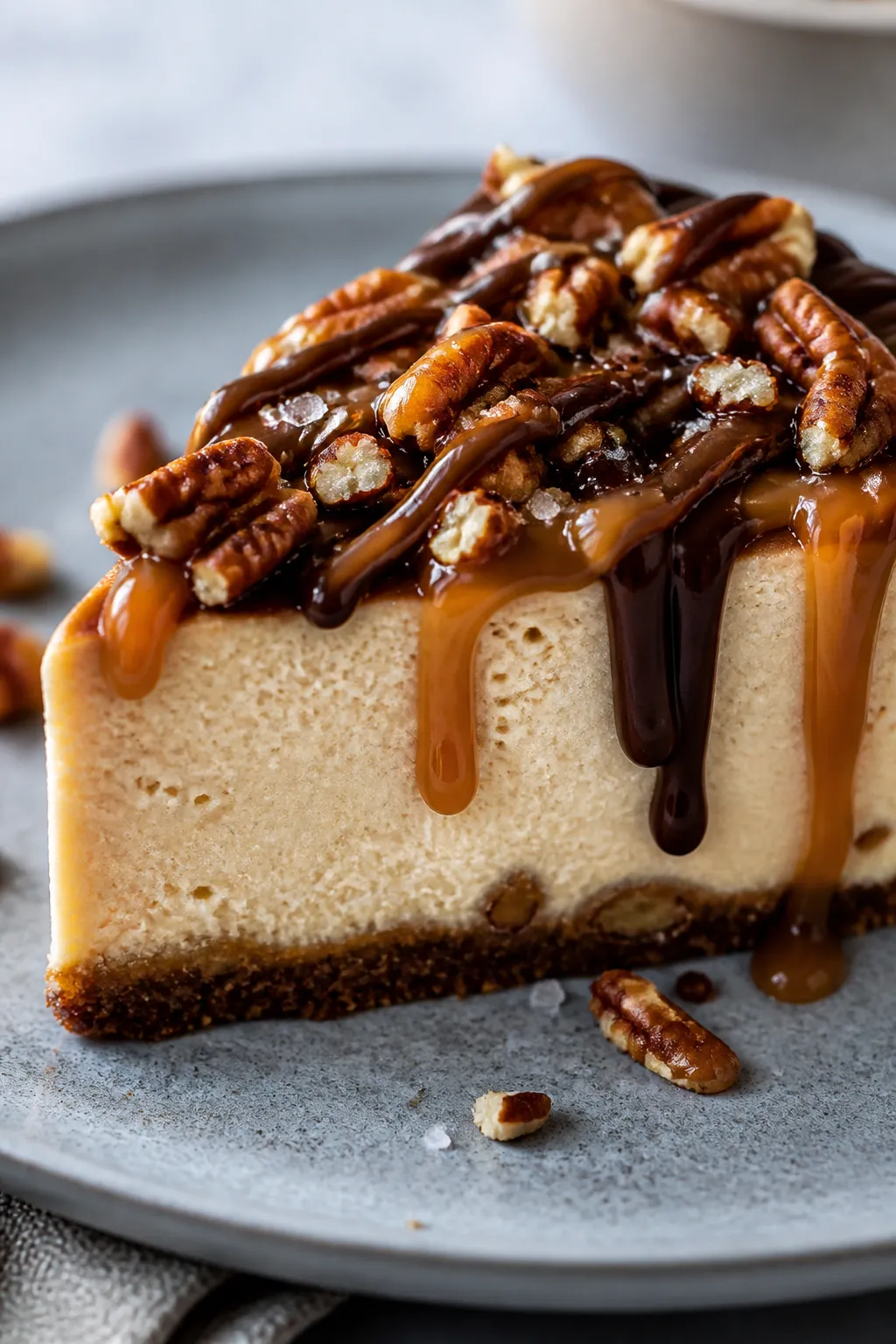
- Classic turtle flavor: Chocolate drizzle, caramel sauce, and toasted pecans recreate the dessert you crave—without loads of sugar.
- No water bath needed: A slower bake and a quick chill help prevent cracks and keep the texture smooth.
- Meal-prep friendly: Makes 12 light slices that store well all week.
- Simple swaps: Dairy-free, gluten-free, and nut-free options are easy to work in.
Shopping List
- For the crust:
- 1 1/2 cups almond flour (or finely ground pecans)
- 3 tablespoons melted unsalted butter (or coconut oil)
- 2 tablespoons granulated erythritol or allulose
- 1/2 teaspoon cinnamon
- Pinch of salt
- For the filling:
- 16 ounces low-fat cottage cheese
- 8 ounces reduced-fat cream cheese, softened
- 1 cup plain nonfat Greek yogurt
- 1/2 cup allulose or erythritol (powdered works best)
- 2 large eggs, room temperature
- 1 scoop (about 30 g) vanilla whey isolate or casein blend
- 2 teaspoons vanilla extract
- 1 tablespoon lemon juice
- 1/4 teaspoon salt
- For the turtle topping:
- 1/3 cup sugar-free chocolate chips
- 1 teaspoon coconut oil (for melting chocolate)
- 1/3 cup sugar-free caramel sauce (store-bought or homemade)
- 1/2 cup chopped toasted pecans
- Flaky sea salt (optional)
- Equipment: 9-inch springform pan, parchment paper, food processor or blender, mixing bowls, hand mixer or whisk
Step-by-Step Instructions
- Prep the pan: Heat oven to 325°F (165°C). Line the bottom of a 9-inch springform pan with parchment.
Lightly grease the sides.
- Make the crust: In a bowl, combine almond flour, melted butter, sweetener, cinnamon, and salt until it resembles damp sand. Press evenly into the pan. Bake 8–10 minutes, just until set and lightly golden.
Cool while you make the filling.
- Blend the dairy base: In a food processor, blend cottage cheese until completely smooth, 1–2 minutes. Add cream cheese and Greek yogurt; blend again until uniform and silky.
- Add flavor and protein: Add sweetener, vanilla, lemon juice, salt, and protein powder. Pulse until smooth.
Taste and adjust sweetness if needed.
- Incorporate eggs: Add eggs one at a time, pulsing briefly after each. Do not overmix—just until combined. Overmixing adds air and can cause cracks.
- Fill and smooth: Pour the filling onto the crust.
Tap the pan gently on the counter a few times to release air bubbles. Run a spatula over the top to even it out.
- Bake low and slow: Bake at 325°F for 35–45 minutes. The edges should be set and the center should have a gentle jiggle.
If it browns too quickly, tent loosely with foil.
- Cool gradually: Turn off the oven, crack the door, and let the cheesecake sit inside for 30 minutes. Then cool on the counter for another 30 minutes.
- Chill completely: Cover and refrigerate at least 4 hours, preferably overnight, to set the texture.
- Toast the pecans: While it chills, toast pecans in a dry skillet over medium heat for 3–4 minutes until fragrant. Cool and chop.
- Add toppings: Melt chocolate chips with coconut oil in short microwave bursts, stirring until smooth.
Drizzle chocolate and caramel over the chilled cheesecake. Sprinkle with toasted pecans and a pinch of flaky sea salt.
- Slice cleanly: Run a knife around the edge before releasing the springform. Warm a sharp knife under hot water, wipe dry, and slice.
Clean the knife between cuts.
Storage Instructions
- Refrigerator: Store slices in an airtight container for up to 5 days.
- Freezer: Freeze individual slices without toppings, wrapped tightly, for up to 2 months. Thaw overnight in the fridge, then add toppings just before serving.
- Meal prep tip: Portion into single-serve containers to make a grab-and-go treat that stays on track with your macros.
Health Benefits
- Protein-packed: Greek yogurt, cottage cheese, and whey isolate combine to support satiety and muscle recovery.
- Lower carb load: Using low-carb sweeteners and an almond flour crust helps reduce blood sugar spikes compared to traditional cheesecake.
- Better fats: Nuts add unsaturated fats and a bit of fiber for a more balanced dessert.
- Portion control built in: Rich flavor means a small slice satisfies, keeping calories reasonable.
Common Mistakes to Avoid
- Skipping the blend: If you don’t fully blend the cottage cheese, you’ll get a grainy texture. Process until completely smooth.
- Overmixing eggs: Too much air leads to cracks.
Pulse just until combined.
- Overbaking: Cheesecake should still wobble in the center when it’s done. If it’s fully firm in the oven, it’s overcooked.
- Rushing the chill: Warm cheesecake won’t set properly. Chill at least 4 hours, ideally overnight.
- Heavy toppings too soon: Wait until the cake is fully chilled to add chocolate, caramel, and nuts for neat drizzles and clean slices.
Variations You Can Try
- Dairy-free: Use dairy-free cream cheese, coconut yogurt, and a plant-based protein powder.
Choose dairy-free chocolate and caramel.
- Nut-free: Swap almond flour crust for a seed crust (sunflower seed flour) and use toasted pumpkin seeds instead of pecans.
- Chocolate swirl: Mix 2 tablespoons cocoa powder with 2 tablespoons hot water, swirl into half the batter, and marble it before baking.
- Salted caramel focus: Add an extra drizzle of caramel and finish with flaky sea salt for a stronger sweet-salty vibe.
- Mini cheesecakes: Bake in a lined muffin tin for 15–18 minutes. Great for portion control and faster chilling.
FAQ
Never Wonder What's For Dinner Again
Get 7 healthy, family-friendly dinners complete with recipes, grocery lists, and simple meal plans delivered straight to your inbox.
Can I use a different sweetener?
Yes. Allulose gives the smoothest texture and cleanest flavor.
Erythritol works but can crystallize slightly after chilling. Monk fruit blends are fine too. Taste and adjust to your preference.
What if I don’t have whey protein?
You can use casein or a whey-casein blend for a thicker, creamier texture.
Plant protein works, but it can be grittier—blend longer and consider reducing the scoop to 20–25 g.
How do I prevent cracks without a water bath?
Bake at a moderate temperature, avoid overmixing, and cool gradually in the oven with the door cracked. Running a knife around the edge after baking also helps release tension.
Can I make it crustless?
Yes. Grease the pan well and line the bottom with parchment.
Bake as directed, but check a few minutes earlier. The macros will be even leaner.
Is the caramel really low carb?
Use a sugar-free caramel made with allulose or a keto-friendly brand. Check labels to avoid hidden sugars and maltitol if you’re sensitive.
How many servings does this make?
A 9-inch cheesecake yields about 12 slices.
For a higher-protein serving, cut into 10. For lighter portions, go with 14.
Can I make it ahead for a party?
Absolutely. Bake the day before, chill overnight, and add toppings a few hours before serving for the best texture and presentation.
What’s the texture like compared to traditional cheesecake?
It’s creamy and smooth, slightly lighter because of the Greek yogurt and cottage cheese.
The protein powder helps it set without feeling chalky when blended well.
In Conclusion
This High Protein Low Carb Turtle Protein Cheesecake brings all the indulgence of the classic dessert with a smarter macro profile. It’s creamy, chocolatey, and caramel-kissed, with toasty pecans for crunch and balance. The method is simple, the ingredients are flexible, and the results are party-worthy.
Keep a few slices chilled for a satisfying treat that actually supports your goals.
Printable Recipe Card
Want just the essential recipe details without scrolling through the article? Get our printable recipe card with just the ingredients and instructions.
Loved This Recipe?
If you're looking for more simple, healthy dinners your family will actually eat, grab my FREE 7-Day Easy Dinner Reset. You'll get 7 easy dinner recipes, simple grocery lists, and a done-for-you plan that takes the stress out of mealtime.