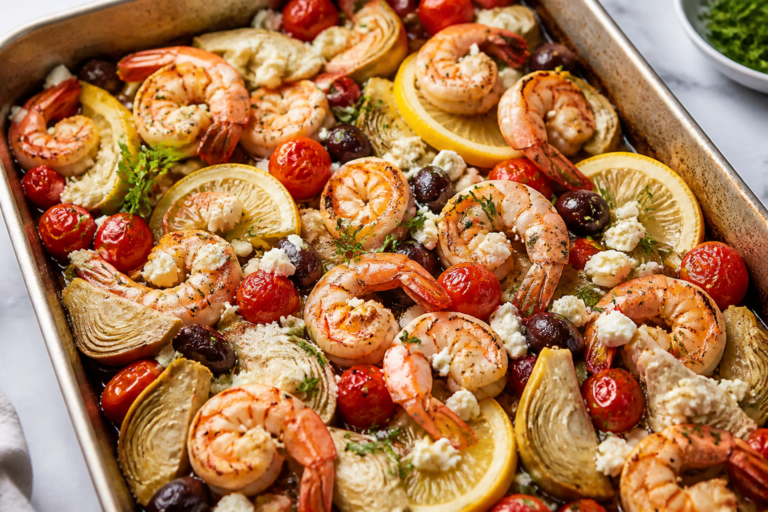
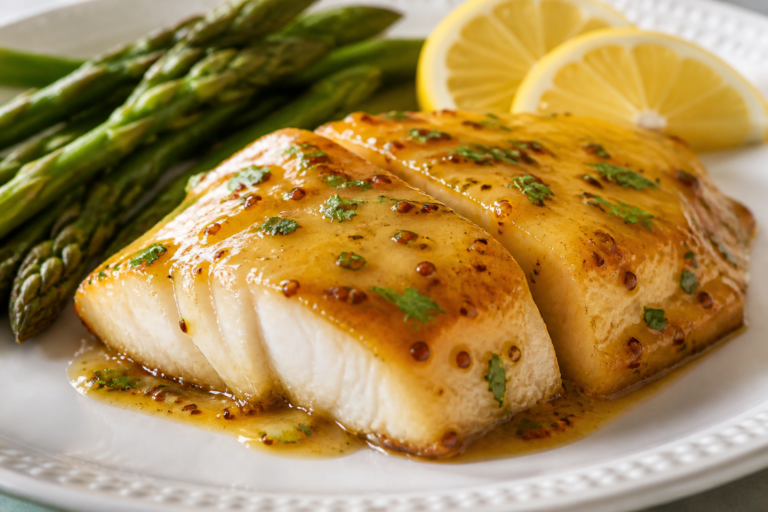
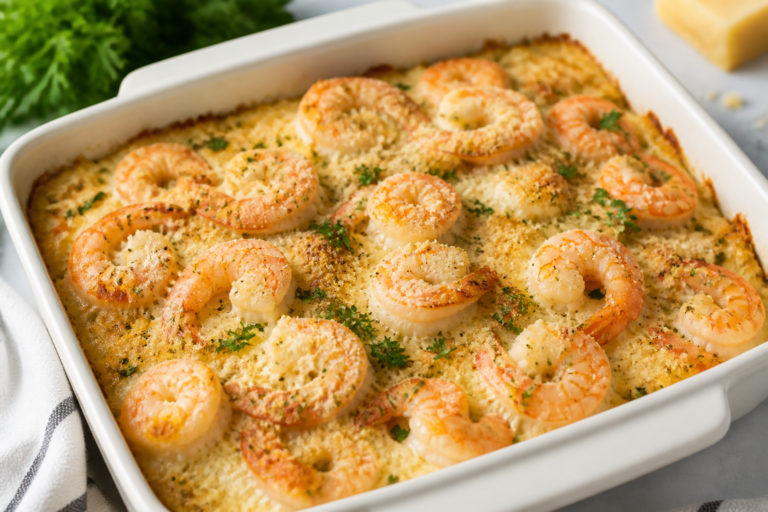
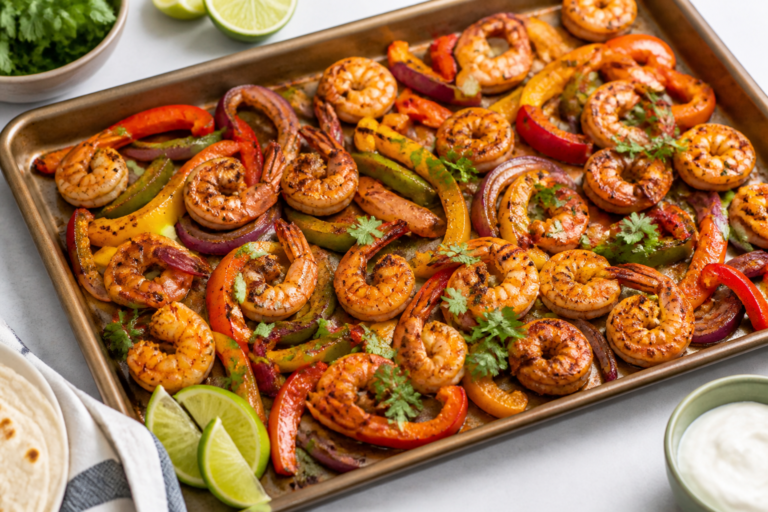
Mediterranean White Fish Bake – Bright, Flavorful, and Weeknight Easy
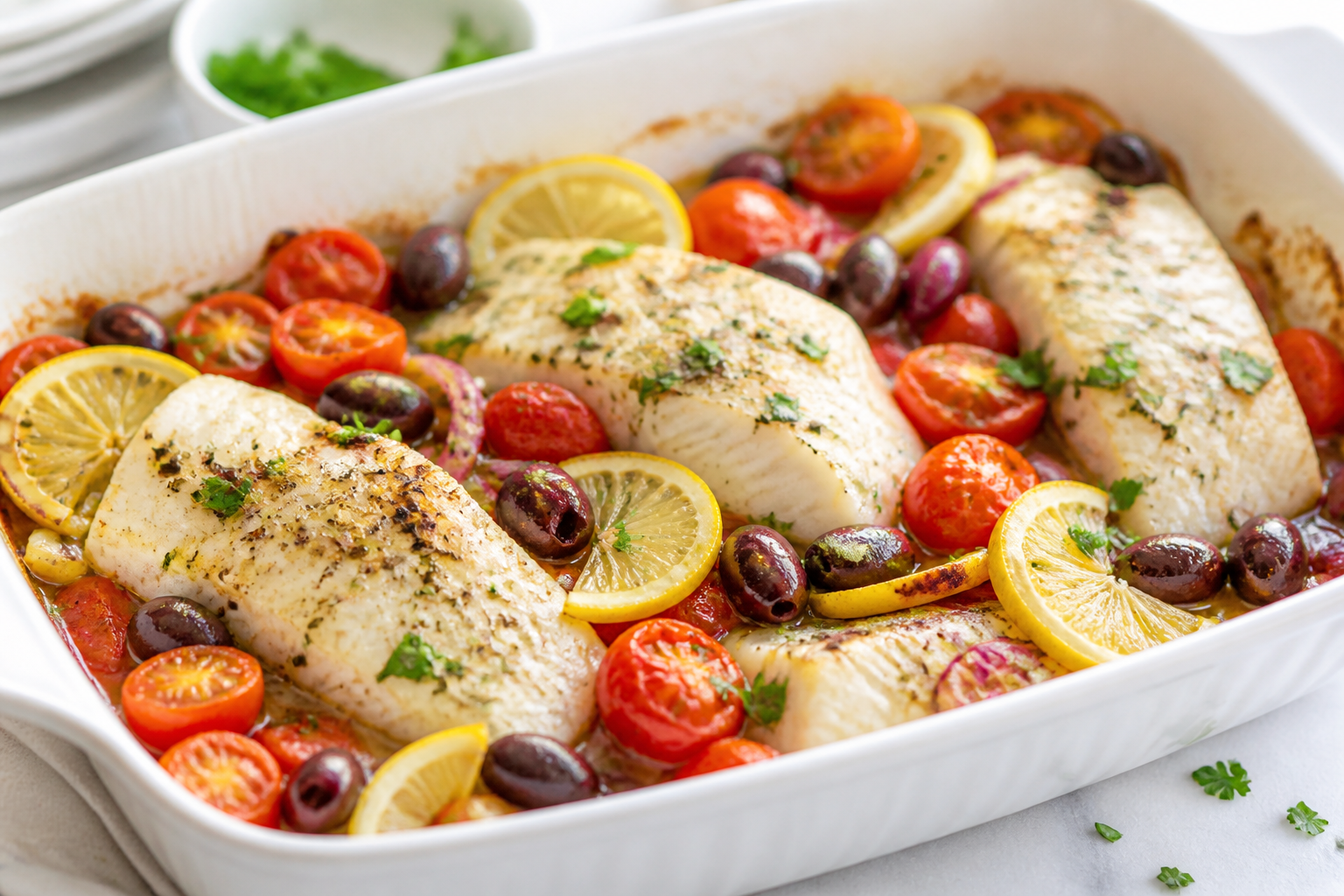
This Mediterranean White Fish Bake is the kind of meal that tastes like sunshine on a plate. It’s simple enough for a busy weeknight but special enough to share with guests. The fish comes out tender and flaky, nestled in a zesty mix of tomatoes, olives, lemon, and herbs.
FREE 7-Day Easy Dinner Reset
Get 7 healthy, family-friendly dinners complete with recipes and simple meal plans delivered straight to your inbox.
Everything bakes together on one pan, so cleanup is minimal and the flavors are full. If you enjoy bold, fresh ingredients with very little fuss, this will become a regular in your rotation.
Ingredients
Method
- Preheat the oven: Set to 400°F (200°C). Lightly oil a large baking dish or rimmed sheet pan.
- Build the base: In the dish, combine tomatoes, red onion, olives, capers, and garlic. Add lemon zest, half the lemon juice, olive oil, white wine or broth, and half the herbs. Season with salt and pepper, then toss to coat and spread evenly.
- Season the fish: Pat the fillets dry. Rub with a little olive oil, then sprinkle with salt, pepper, smoked paprika, and red pepper flakes if using.
- Nestle and top: Arrange the fillets over the veggie mixture. Spoon a bit of the juices over the top. Add a few thin lemon slices on the fish for extra aroma.
- Bake until flaky: Place in the oven and bake 12–16 minutes, depending on thickness. The fish is done when it flakes easily and reaches 135–145°F (57–63°C) internally. Thinner fillets cook faster, so start checking at 10–12 minutes.
- Finish with freshness: Remove from the oven and sprinkle with remaining herbs and the rest of the lemon juice. Taste the pan juices and adjust salt and pepper as needed.
- Serve: Spoon the veggies and sauce over the fish. Add crumbled feta if you like. Pair with couscous, rice, or bread to catch the juices.
What Makes This Special
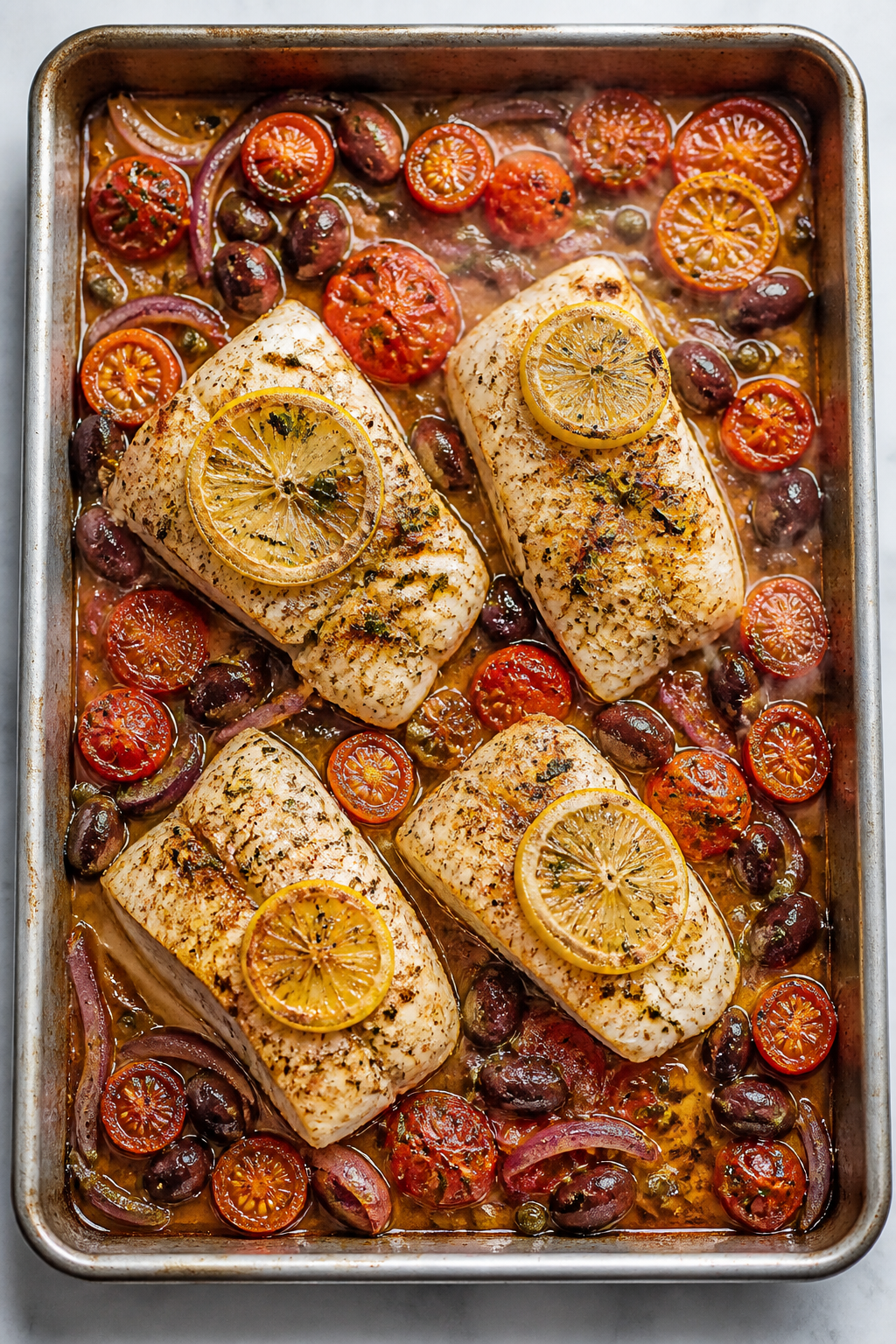
This recipe highlights the Mediterranean approach to cooking: fresh ingredients, straightforward steps, and big flavor. The citrus and herbs keep the fish bright, while the olives, capers, and garlic add savory depth.
Because it bakes in one dish, the juices mingle into a light sauce you can spoon over couscous or crusty bread. It’s also flexible—swap the fish, adjust the veggies, or tweak the spices to make it your own. Best of all, it cooks fast, so dinner is on the table in under 30 minutes.
What You’ll Need
- White fish fillets (1.5–2 pounds total): Cod, halibut, haddock, or sea bass work well
- Cherry or grape tomatoes (2 cups): Halved
- Red onion (1 small): Thinly sliced
- Kalamata olives (1/2 cup): Pitted and halved
- Capers (2 tablespoons): Drained
- Garlic (3–4 cloves): Minced
- Lemon (1 large): Zested and juiced, plus extra slices for garnish
- Extra-virgin olive oil (3 tablespoons)
- Dry white wine or low-sodium broth (1/4 cup): Optional but recommended
- Fresh parsley (1/4 cup): Chopped
- Fresh oregano or thyme (1 tablespoon): Chopped, or 1 teaspoon dried
- Smoked paprika (1/2 teaspoon): Optional for warmth and color
- Red pepper flakes (1/4 teaspoon): Optional for gentle heat
- Kosher salt and freshly ground black pepper
- Serving ideas: Cooked couscous, quinoa, rice, or crusty bread; feta cheese for garnish (optional)
Step-by-Step Instructions
- Preheat the oven: Set to 400°F (200°C).
Lightly oil a large baking dish or rimmed sheet pan.
- Build the base: In the dish, combine tomatoes, red onion, olives, capers, and garlic. Add lemon zest, half the lemon juice, olive oil, white wine or broth, and half the herbs. Season with salt and pepper, then toss to coat and spread evenly.
- Season the fish: Pat the fillets dry.
Rub with a little olive oil, then sprinkle with salt, pepper, smoked paprika, and red pepper flakes if using.
- Nestle and top: Arrange the fillets over the veggie mixture. Spoon a bit of the juices over the top. Add a few thin lemon slices on the fish for extra aroma.
- Bake until flaky: Place in the oven and bake 12–16 minutes, depending on thickness.
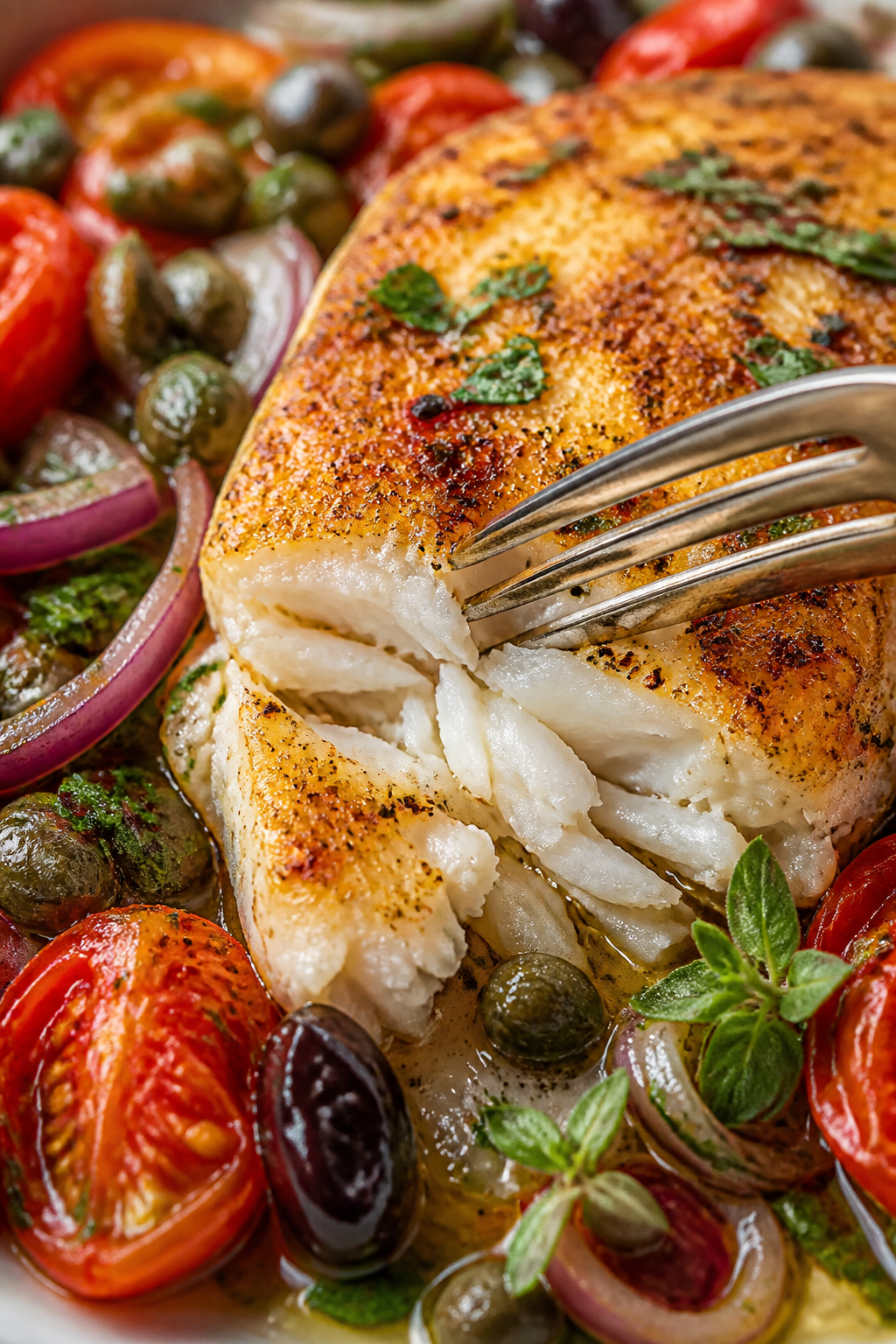
The fish is done when it flakes easily and reaches 135–145°F (57–63°C) internally. Thinner fillets cook faster, so start checking at 10–12 minutes.
- Finish with freshness: Remove from the oven and sprinkle with remaining herbs and the rest of the lemon juice. Taste the pan juices and adjust salt and pepper as needed.
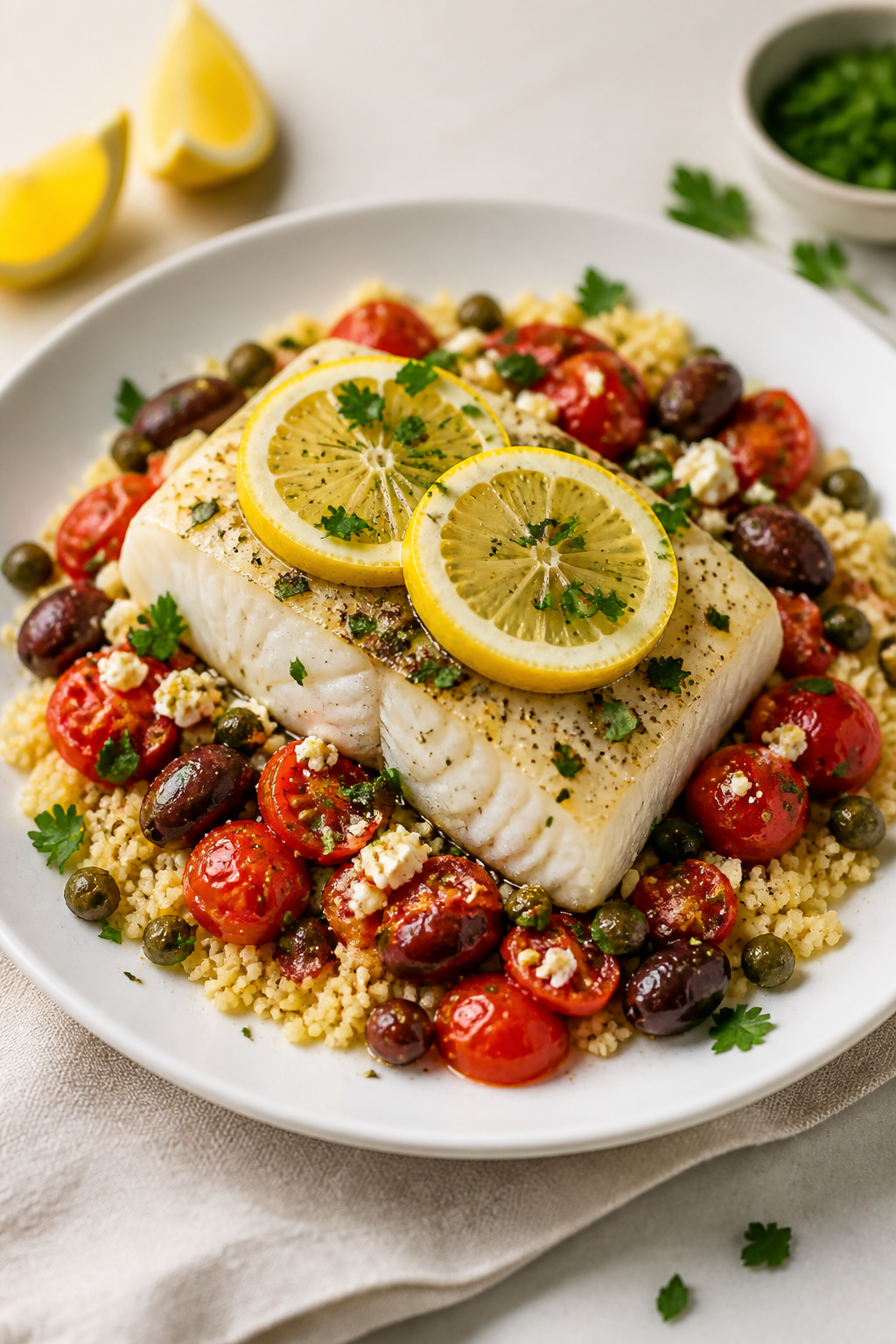
- Serve: Spoon the veggies and sauce over the fish.
Add crumbled feta if you like. Pair with couscous, rice, or bread to catch the juices.
Storage Instructions
- Refrigerate: Cool completely, then store in an airtight container for up to 2 days.
- Reheat gently: Warm in a 300°F (150°C) oven until just heated through, or microwave on low power in short bursts to avoid overcooking.
- Avoid freezing: White fish can turn mushy when frozen after cooking. If you must freeze, wrap tightly and use within 1 month, understanding texture may change.
- Leftover ideas: Flake the fish and toss with the roasted veggies into a salad, grain bowl, or warm pita with a dollop of yogurt.
Health Benefits
- Lean protein: White fish is low in fat and high in protein, supporting muscle health without heavy calories.
- Heart-friendly fats: While white fish isn’t as rich in omega-3s as salmon, it still offers some, and the olive oil adds monounsaturated fats that support heart health.
- Antioxidants: Tomatoes, garlic, and herbs bring antioxidants that help reduce oxidative stress.
- Lower sodium options: Using low-sodium broth and rinsing capers keeps salt in check without losing flavor.
- Balanced plate: Serve with whole grains and a leafy salad for fiber, vitamins, and steady energy.
What Not to Do
- Don’t overbake: Dry, tough fish happens fast.
Start checking early and pull it as soon as it flakes.
- Don’t skip drying the fillets: Patting them dry helps seasonings stick and prevents steaming instead of roasting.
- Don’t drown the dish: A splash of wine or broth is great, but too much liquid dilutes flavor and makes the veggies watery.
- Don’t overcrowd the pan: If the vegetables pile too high, they’ll steam. Use a larger pan or two if needed.
- Don’t forget acidity: Lemon is key. Without it, the dish tastes flat.
Alternatives
- Fish swaps: Try tilapia, pollock, or snapper.
For a richer option, use salmon and reduce the oil slightly.
- Veggie variations: Add sliced bell peppers, zucchini, or artichoke hearts. For a briny twist, include a few sun-dried tomatoes.
- Herb and spice switch-ups: Use basil and dill in summer, or cumin and coriander for a warmer profile. A pinch of sumac adds citrusy zing.
- No wine? Use extra lemon juice and broth.
For a touch of sweetness, add a few torn basil leaves after baking.
- Dairy add-ons: Crumbled feta or a dollop of garlicky yogurt sauce on the side complements the flavors.
- Low-carb serving: Plate with cauliflower rice or a big Greek salad instead of grains.
FAQ
Which white fish is best for this recipe?
Never Wonder What's For Dinner Again
Get 7 healthy, family-friendly dinners complete with recipes, grocery lists, and simple meal plans delivered straight to your inbox.
Carnivorous preference aside, cod and halibut are top choices because they’re firm yet flaky and hold up well to baking. Haddock, sea bass, and snapper also work nicely. Choose fresh, mild-smelling fillets that are about the same thickness so they cook evenly.
How do I know when the fish is done?
Check at the thickest part.
It should flake easily with a fork and look opaque rather than translucent. If you use a thermometer, aim for 135–145°F (57–63°C), pulling from the oven at the lower end for a just-cooked, moist texture.
Can I make this ahead?
You can prep the vegetable base and refrigerate it for up to 24 hours. Season the fish right before baking so it doesn’t get watery.
Assemble, then bake just before serving.
Is it okay to use frozen fish?
Yes—just thaw fully in the fridge and pat very dry. Frozen fish can release extra moisture, so drying is key to avoid a watery bake. Increase the baking time by a couple of minutes if the fillets are very cold.
What can I serve with it?
Couscous, herbed quinoa, lemon rice, or warm crusty bread are all excellent.
A simple side salad with cucumbers, tomatoes, and a light vinaigrette keeps the meal fresh and balanced.
How can I make it spicier?
Add more red pepper flakes, or stir in a spoonful of harissa to the veggie mix. A drizzle of chili oil at the end also brings heat without overpowering the citrus and herbs.
Can I cook this on the stovetop?
Yes. Sauté the veggies in a large skillet until softened, then add liquids and simmer.
Nestle the fish on top, cover, and cook on low until the fish flakes. You’ll get a slightly saucier result.
How do I keep the fish from sticking?
Lightly oil the baking dish and brush a thin layer of oil on the fish. Nonstick or parchment-lined pans also help.
Moving the fish less during baking reduces the chance of tearing.
In Conclusion
This Mediterranean White Fish Bake delivers bright, layered flavor with very little hands-on time. The simple ingredients work together to make a meal that’s fresh, satisfying, and adaptable to what you have. Keep it in your weeknight lineup, and you’ll have a reliable, healthy dinner that never feels boring.
Serve it hot, pass the lemon wedges, and enjoy the clean, sunny taste in every bite.
Printable Recipe Card
Want just the essential recipe details without scrolling through the article? Get our printable recipe card with just the ingredients and instructions.
Loved This Recipe?
If you're looking for more simple, healthy dinners your family will actually eat, grab my FREE 7-Day Easy Dinner Reset. You'll get 7 easy dinner recipes, simple grocery lists, and a done-for-you plan that takes the stress out of mealtime.