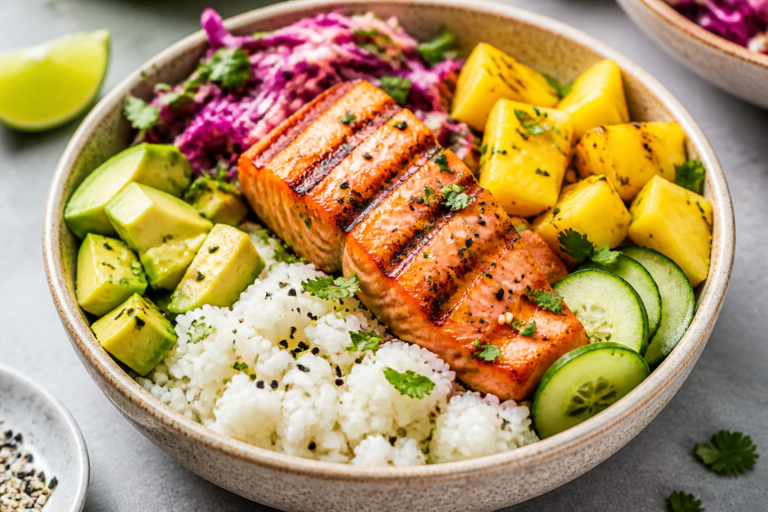
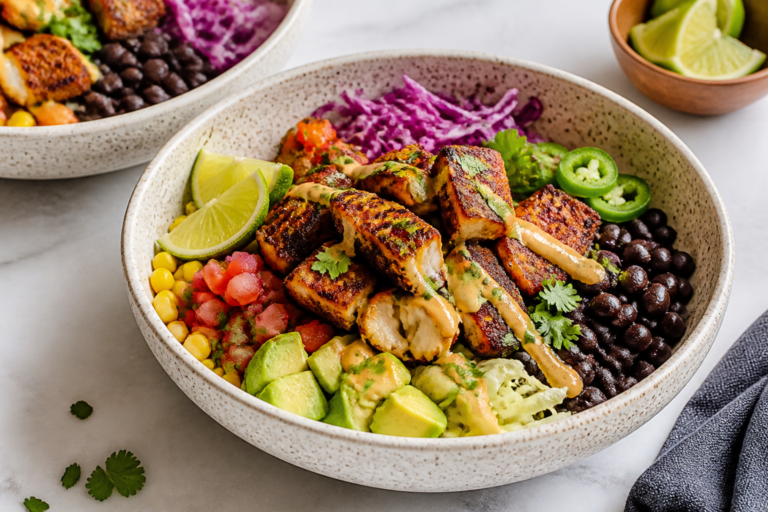
Blackened Mahi Mahi with Avocado Salsa – A Bright, Bold Weeknight Favorite
If you’re craving something light, flavorful, and ready in minutes, this is it. Blackened mahi mahi brings a smoky, spicy crust that pairs perfectly with a cool, creamy avocado salsa. It’s the kind of meal that feels restaurant-worthy but doesn’t ask much from you.
FREE 7-Day Easy Dinner Reset
Get 7 healthy, family-friendly dinners complete with recipes and simple meal plans delivered straight to your inbox.
A quick spice rub, a hot pan, and a simple chop of fresh ingredients are all you need. Serve it with rice, on tacos, or over greens, and dinner is done.
Ingredients
Method
- Make the spice mix: In a small bowl, combine smoked paprika, garlic powder, onion powder, oregano, thyme, salt, black pepper, cayenne, and brown sugar if using.
- Prep the fish: Pat the mahi mahi dry with paper towels. Dry fish sears better and forms a better crust. Rub both sides lightly with oil, then coat generously with the spice mix, pressing it in so it sticks.
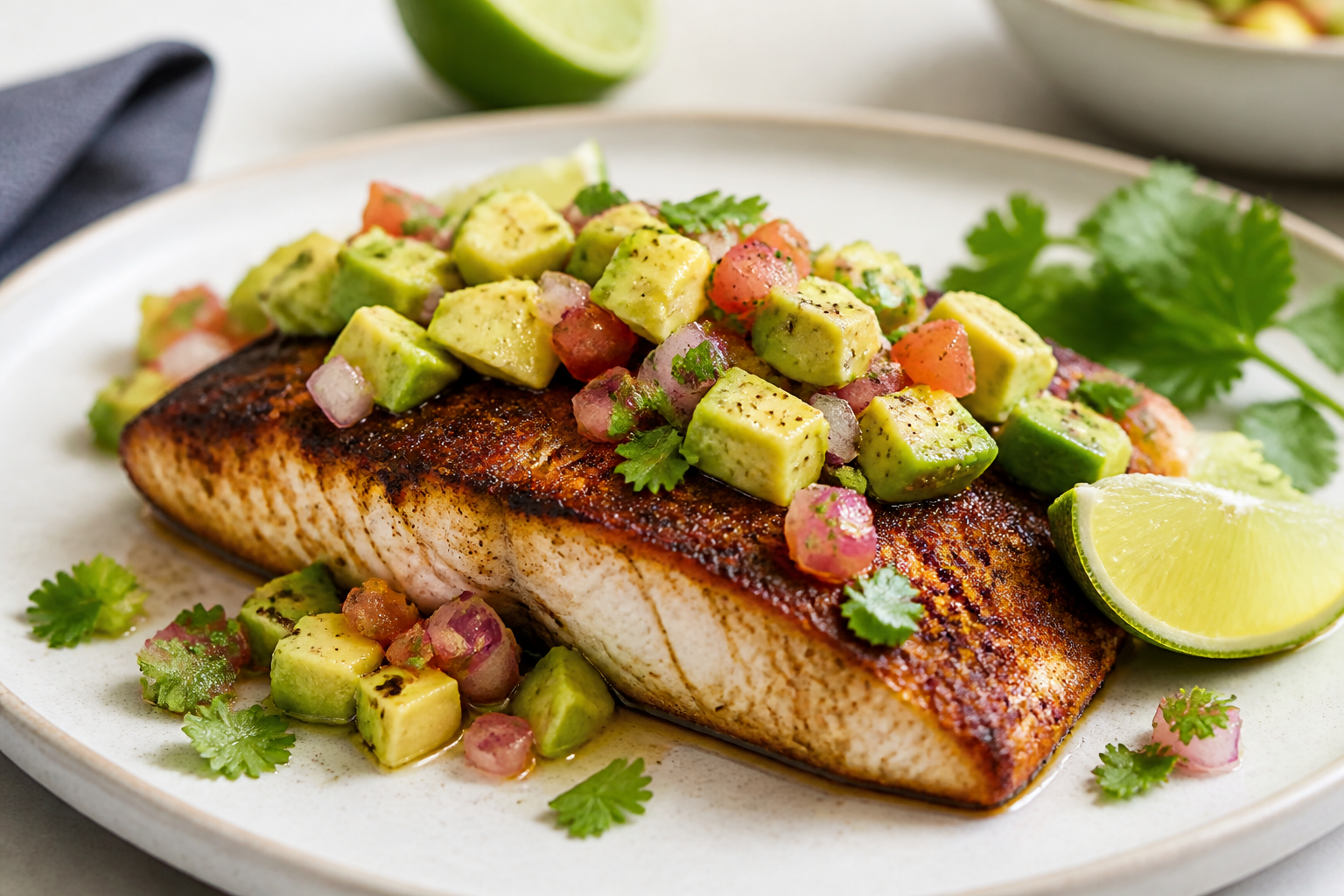
- Mix the salsa: In a medium bowl, combine avocado, cherry tomatoes, red onion, jalapeño, and cilantro. Add lime zest, lime juice, olive oil, and a pinch of salt and pepper. Toss gently to keep the avocado chunky. Set aside.
- Heat the pan: Place a large cast-iron or heavy skillet over medium-high heat. When it’s hot, add oil. If using butter for flavor, add it just before the fish to prevent burning.
- Sear the fish: Lay the fillets in the pan without crowding. Cook undisturbed for 3 to 4 minutes until the edges look opaque and the underside forms a dark, crisp crust.
- Flip and finish: Carefully flip. Cook another 2 to 4 minutes, depending on thickness, until the fish flakes easily and is just opaque in the center. Aim for an internal temperature of 130–135°F for moist fish; it will carryover cook slightly off heat.
- Rest briefly: Transfer to a plate and let rest 2 minutes to set the juices.
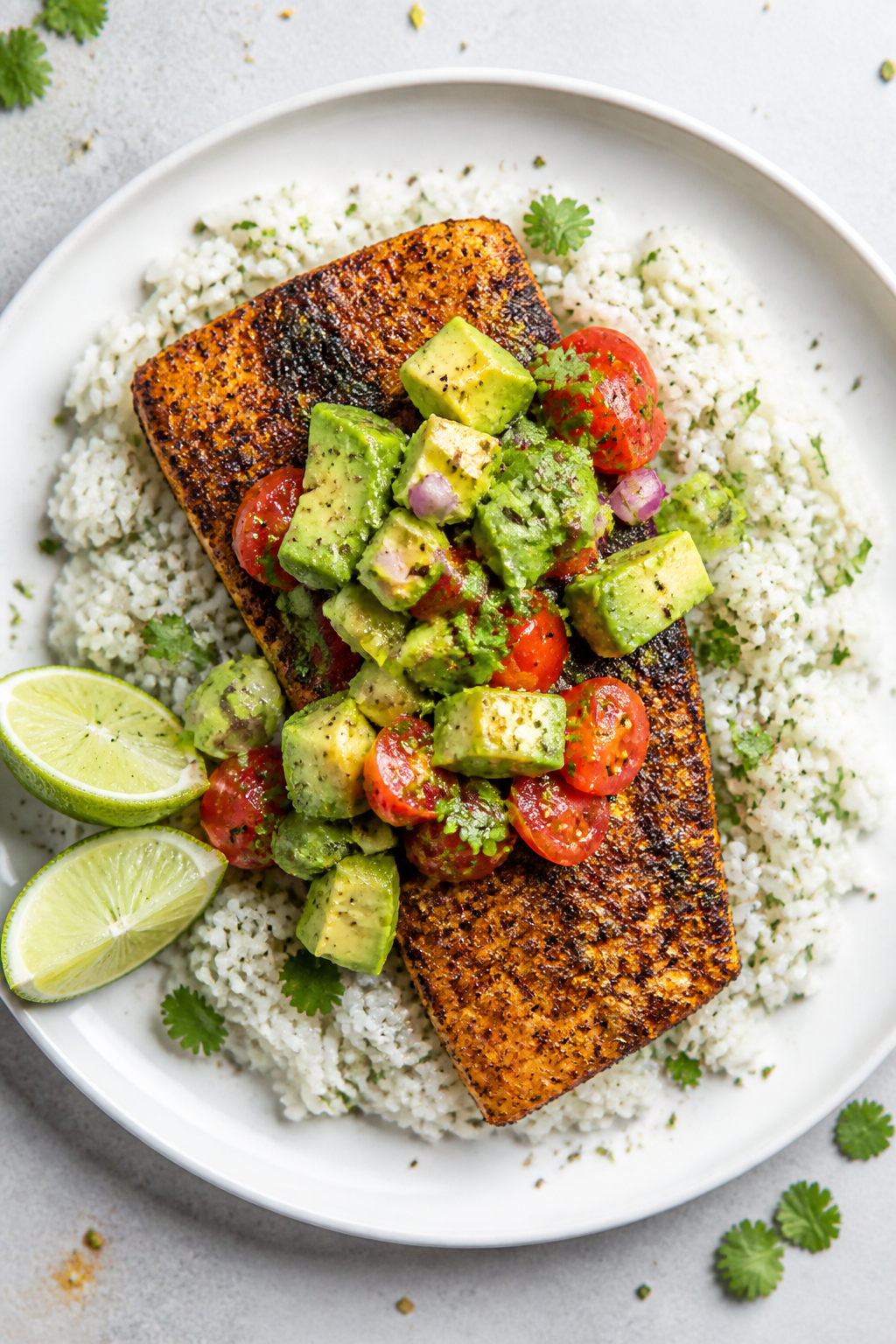
- Serve: Spoon avocado salsa over the fish. Add lime wedges on the side. Serve with tortillas, rice, or a crisp salad.
Why This Recipe Works
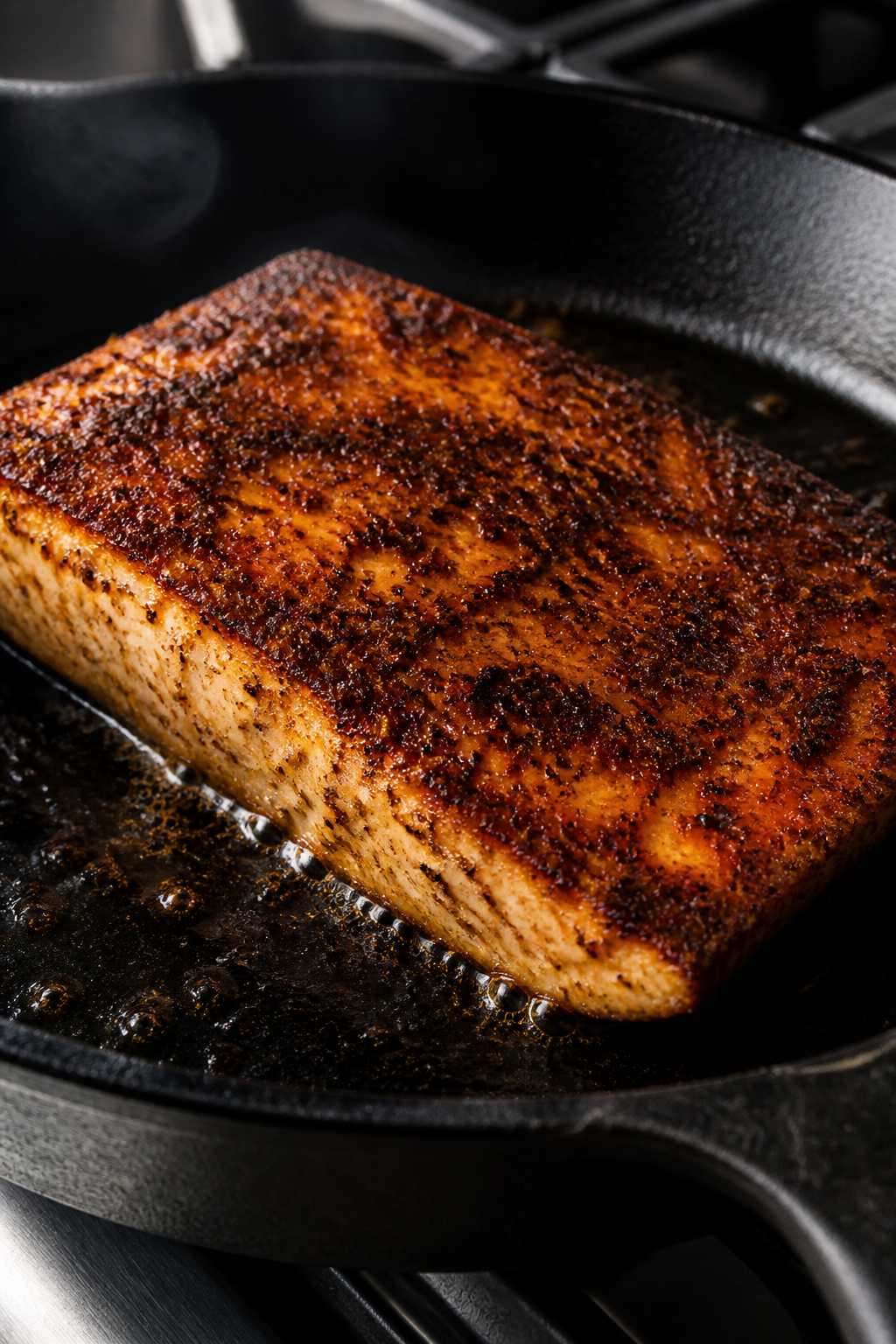
This recipe relies on contrast. The fish gets a deep, savory crust from a bold spice mix and high heat, while the salsa adds brightness and creaminess.
Mahi mahi is a great choice because it’s firm, mild, and holds up well to searing without falling apart. The avocado balances the heat, and the lime brings everything to life. It’s quick enough for weeknights and special enough for guests.
What You’ll Need
- Mahi Mahi Fillets: 4 fillets (about 6 ounces each), patted dry
- Olive Oil or Avocado Oil: 2 tablespoons, plus more if needed
- Butter (optional): 1 tablespoon for a richer crust
- Blackening Spice Mix:
- 1 tablespoon smoked paprika
- 1 teaspoon garlic powder
- 1 teaspoon onion powder
- 1 teaspoon dried oregano
- 1 teaspoon dried thyme
- 1 teaspoon kosher salt
- 1/2 teaspoon black pepper
- 1/2 to 1 teaspoon cayenne pepper (to taste)
- 1/2 teaspoon brown sugar (optional, for caramelization)
- Avocado Salsa:
- 2 ripe avocados, diced
- 1 cup cherry tomatoes, quartered
- 1/4 cup red onion, finely minced
- 1 jalapeño, seeded and minced (optional)
- 1/4 cup fresh cilantro, chopped
- 1 lime, zested and juiced
- 1 tablespoon olive oil
- Salt and pepper to taste
- To Serve (optional): lime wedges, warm tortillas, rice, or mixed greens
Instructions
- Make the spice mix: In a small bowl, combine smoked paprika, garlic powder, onion powder, oregano, thyme, salt, black pepper, cayenne, and brown sugar if using.
- Prep the fish: Pat the mahi mahi dry with paper towels.
Dry fish sears better and forms a better crust. Rub both sides lightly with oil, then coat generously with the spice mix, pressing it in so it sticks.
- Mix the salsa: In a medium bowl, combine avocado, cherry tomatoes, red onion, jalapeño, and cilantro. Add lime zest, lime juice, olive oil, and a pinch of salt and pepper.
Toss gently to keep the avocado chunky. Set aside.
- Heat the pan: Place a large cast-iron or heavy skillet over medium-high heat. When it’s hot, add oil.
If using butter for flavor, add it just before the fish to prevent burning.
- Sear the fish: Lay the fillets in the pan without crowding. Cook undisturbed for 3 to 4 minutes until the edges look opaque and the underside forms a dark, crisp crust.
- Flip and finish: Carefully flip. Cook another 2 to 4 minutes, depending on thickness, until the fish flakes easily and is just opaque in the center.
Aim for an internal temperature of 130–135°F for moist fish; it will carryover cook slightly off heat.
- Rest briefly: Transfer to a plate and let rest 2 minutes to set the juices.
- Serve: Spoon avocado salsa over the fish. Add lime wedges on the side. Serve with tortillas, rice, or a crisp salad.
Keeping It Fresh
The key to freshness is timing and temperature. Make the salsa close to serving so the avocado stays bright and creamy.
If you need to prep ahead, press a piece of plastic wrap directly onto the salsa’s surface and refrigerate for up to 4 hours. Cooked fish is best the day it’s made, but you can refrigerate leftovers in an airtight container for up to 2 days. Reheat gently in a skillet over low heat or enjoy cold, flaked over a salad.
Why This is Good for You
Mahi mahi is a lean protein with very little saturated fat, which helps keep the meal light.
It provides high-quality protein to support muscle repair and keep you full. Avocado adds heart-healthy monounsaturated fats along with fiber and potassium. Tomatoes and lime bring vitamins C and A, while the spices add antioxidants without extra calories.
Altogether, it’s a balanced plate with satisfying flavors and smart nutrition.
Common Mistakes to Avoid
- Skipping the pat-dry step: Moisture prevents browning and leads to steaming instead of searing.
- Pan not hot enough: A properly heated pan is crucial for that signature blackened crust. Preheat longer than you think.
- Overcooking the fish: Mahi mahi dries out if you push it too far. Pull it when it just flakes and is slightly translucent in the center.
- Overmixing the salsa: Stir gently to avoid mashing the avocado.
- Using too much oil: You want a thin sheen in the pan.
Excess oil can burn the spices and turn bitter.
- Forgetting to season the salsa: A pinch of salt and enough lime juice make the flavors pop.
Alternatives
- Fish swaps: Use cod, halibut, snapper, or salmon. Adjust cook time based on thickness.
- Mild vs. spicy: Reduce cayenne for less heat, or add a pinch of chipotle powder for smoky spice.
- Herb changes: Try parsley or green onion if you’re not a cilantro fan.
- Citrus twist: Swap lime with lemon or add a splash of orange juice for sweetness.
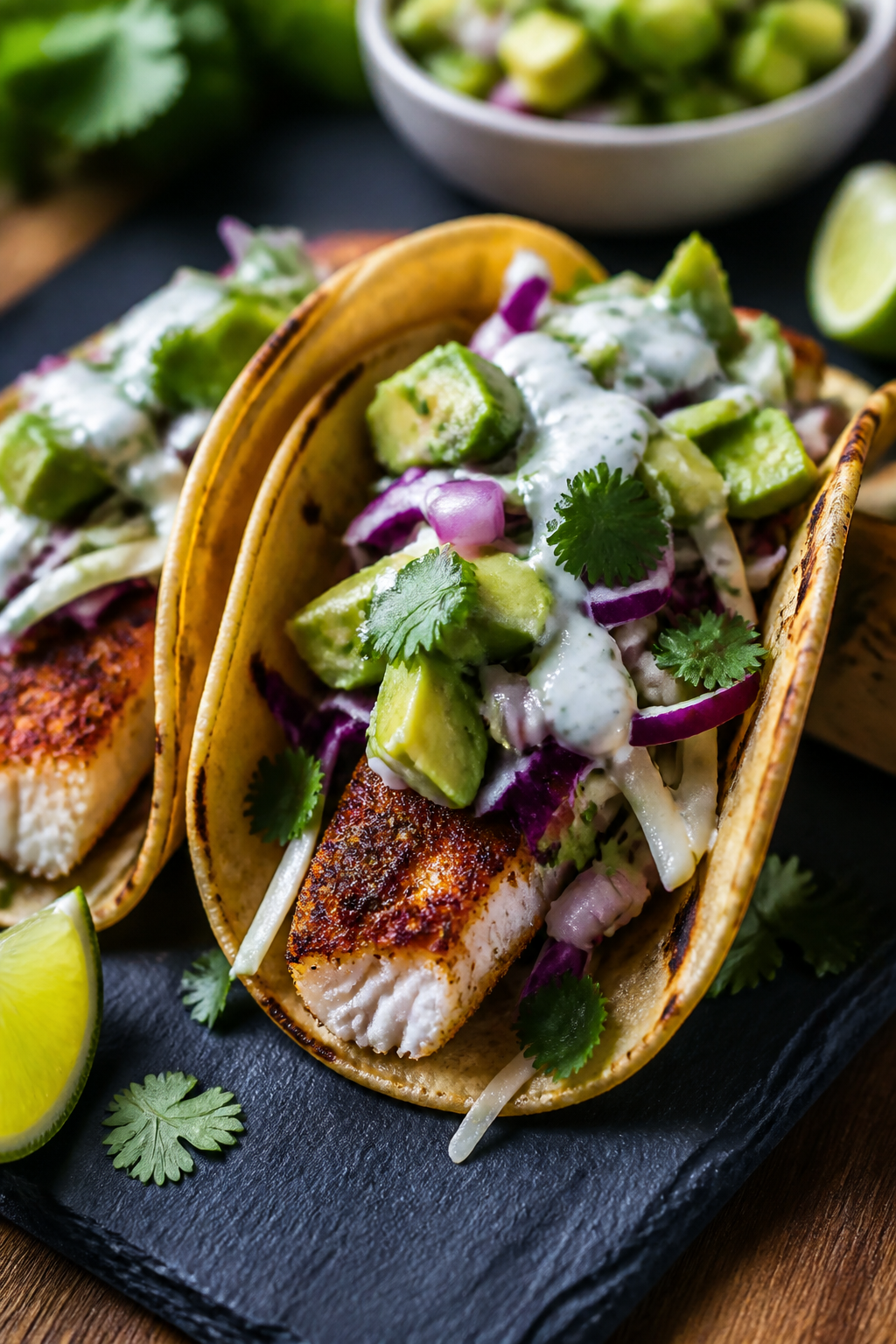
- Taco night: Tuck the fish and salsa into warm tortillas with shredded cabbage and a drizzle of yogurt-lime sauce.
- Grill option: Oil the grates, then grill over medium-high heat, 3–4 minutes per side. The char works beautifully with the spices.
- No avocado? Make a quick mango or pineapple salsa for a tropical, tangy swap.
FAQ
Can I make the spice mix ahead of time?
Never Wonder What's For Dinner Again
Get 7 healthy, family-friendly dinners complete with recipes, grocery lists, and simple meal plans delivered straight to your inbox.
Yes.
Mix a larger batch and store it in a sealed jar for up to 6 months. Keep it in a cool, dark place to maintain flavor.
How do I know when mahi mahi is done?
It should flake easily with a fork and look opaque with just a hint of translucency in the center. If you use a thermometer, aim for 130–135°F and let it rest briefly.
What if my fillets are different thicknesses?
Start the thicker pieces first and give them a minute head start.
Pull the thinner ones earlier so everything finishes around the same time.
Can I use frozen mahi mahi?
Absolutely. Thaw it overnight in the fridge, then pat very dry before seasoning. Frozen fish can shed more water, so the dry step is extra important.
How spicy is this?
It’s moderately spicy with the listed cayenne.
For less heat, cut the cayenne in half or skip the jalapeño in the salsa. For more, add extra cayenne or a pinch of chipotle.
What should I serve with it?
Rice, coconut rice, or cilantro-lime rice are great options. You can also serve it over mixed greens or tuck it into tacos with cabbage.
Can I bake instead of sear?
Yes.
Brush the fillets with oil, coat with spices, and bake at 425°F for 10–12 minutes, depending on thickness. You’ll lose some crust, but the flavor stays great.
How do I prevent the spices from burning?
Use medium-high heat, not full blast. Add enough oil to lightly coat the pan and don’t move the fish too early.
If using butter, combine it with oil to raise the smoke point.
Is mahi mahi sustainable?
Look for MSC-certified or best-choice ratings from reputable guides. Availability varies by region, so check local recommendations.
Can I make it dairy-free?
Yes. Skip the butter and use only oil.
The crust will still develop well, and the salsa keeps everything rich and satisfying.
In Conclusion
Blackened Mahi Mahi with Avocado Salsa delivers big flavor with little effort. The spicy crust, cool salsa, and fresh lime make each bite balanced and bright. Whether you serve it over rice, as tacos, or alongside a crisp salad, this recipe earns a permanent spot in your rotation.
It’s quick, healthy, and consistently delicious—exactly what a weeknight dinner should be.
Printable Recipe Card
Want just the essential recipe details without scrolling through the article? Get our printable recipe card with just the ingredients and instructions.
Loved This Recipe?
If you're looking for more simple, healthy dinners your family will actually eat, grab my FREE 7-Day Easy Dinner Reset. You'll get 7 easy dinner recipes, simple grocery lists, and a done-for-you plan that takes the stress out of mealtime.